Latest articles

Accounting Automation: The Complete Guide for Businesses
Business growth is usually good news. The number of clients, turnover, employees, and transaction volume increases. However, with growth also comes an increase in what clients and partners don't see daily—administrative work. Each new supplier means more incoming invoices. Each new client—more issued documents and payments. Each new employee—more personnel and payroll records. If a company's processes remain unchanged, the administrative workload grows almost as quickly as the business itself. That's why more and more companies view automation not as an IT project but as a way to maintain efficiency even as the company continues to grow. Data supports this view. According to Eurostat in 2025, 52.7% of European Union companies used cloud services, compared to 44.1% in Latvia. This indicates that many Latvian companies still have the opportunity to significantly improve their processes and leverage the advantages of digitalization. One of the areas where benefits are often felt relatively quickly is accounting. By automating repetitive processes, companies can reduce manual work, speed up information flow, and ensure that financial data is available when needed for decision-making. In this guide, we will explore what accounting automation is, which processes can be automated, the main benefits, and how a company can start making changes step by step. What is Accounting Automation? When discussing accounting automation, there is often a misconception that it is a specific program or function that solves all problems in one day. In reality, automation is not a single tool—it's an approach to work organization. It is based on a simple principle: if a process is regularly repeated and does not require individual professional decisions, at least part of the process can be entrusted to a system. In practice, this can mean automatic document data reading, bank transaction imports, regular journal entry creation, payroll preparation, or financial report generation. Each of these tasks may seem small individually, but together they make up a significant part of daily accounting work. According to McKinsey estimates, approximately 60% of professions involve at least 30% of tasks that can technically be automated. Among the activities with the highest automation potential are data processing and aggregation—processes that form a significant part of daily accounting work. That's why the greatest value of automation is not that one process becomes a few minutes shorter, but when dozens of such processes together save hours every week while simultaneously reducing the likelihood of errors. It's also important to understand that automation does not change the role of the accountant in the company. It changes the content of their work. The less time required for data entry and repetitive administrative tasks, the more time can be devoted to areas where human experience truly adds value—financial analysis, risk assessment, and consulting company management. Why is Accounting Automation Becoming Increasingly Relevant? Accounting automation has not gained popularity solely because technology has advanced. The main reason is that the way companies work has fundamentally changed in recent years. Today, companies process much more information than they did ten years ago. The number of incoming and outgoing invoices increases, transactions occur more frequently, data accuracy requirements rise, and the ability to access current financial information at any time becomes increasingly important. Simultaneously, the regulatory environment is changing. For example, starting in 2026, structured e-invoices became mandatory in transactions between businesses and the state in Latvia, and by 2028, they will also be mandatory between businesses. This is a significant step toward digital data circulation, as information between company systems can move in a structured format, reducing the need for manual data entry. However, automation is driven not only by regulatory requirements. Increasingly, companies themselves find that their existing processes simply cannot keep up with business growth. In such situations, hiring additional staff is not always the only or most effective solution. In many cases, greater benefits come from reviewing and automating processes. Which Accounting Processes Can Be Automated? In most companies, it is not necessary to automate everything at once. It is much more effective to start with processes where repetitive tasks consume the most time. These are usually the areas with the greatest potential to save resources and reduce error risks. Let's examine the processes where companies most often take their first steps toward automation. Document Processing For most accountants, the workday begins with documents. Incoming invoices, receipts, advance settlements, contracts, and other supporting documents form the foundation of a company's financial records. The more documents a company processes, the more time is needed for verification and data entry. Document processing is one of the areas where the benefits of automation are often noticeable within the first weeks after implementation. Modern systems can recognize information in documents, prepare it for entry into accounting software, and assist in data classification. This does not mean that the accountant is no longer involved in the process—their task is to verify the data and evaluate exceptions, not manually rewrite each field. Such an approach reduces repetitive work while maintaining control over the quality of accounting data. For the company, this means not only faster document processing. The quicker documents enter the accounting system, the sooner management gains an up-to-date understanding of costs, liabilities, and financial status. E-Invoice Circulation Although many companies use electronically sent PDF invoices daily, this does not mean that document processing is automated. PDFs are convenient for humans, but they are still documents whose content must first be recognized by a system. E-invoices work differently. They are a structured data format designed not for human reading but for information exchange between systems. This means that invoice data can enter accounting software without the need for repeated data entry. This difference is becoming increasingly significant in Latvia as well. Starting in 2028, the use of structured e-invoices will become mandatory in transactions between businesses, making digital document circulation a daily practice rather than an optional choice. However, the greatest value of e-invoices is not just compliance with regulatory requirements. They lay the foundation for faster document circulation, more accurate data, and more efficient collaboration between companies. Bank Transaction Processing The bank account statement is one of the most important sources of information in accounting. Each incoming or outgoing payment must be matched with invoices, identified, and recorded. If this work is done manually, it becomes increasingly time-consuming as the number of transactions grows. Automated data exchange with banks allows payment information to be received directly in the accounting system. Some solutions can also automatically link payments to corresponding documents or prepare suggestions for journal entries, which the accountant then reviews and approves. This significantly reduces administrative work and allows the company to gain a quicker understanding of cash flow. Automation of Recurring Journal Entries Not all accounting tasks are different every month. Some processes repeat regularly—rental payments, subscription services, insurance costs, or other periodic transactions. If such journal entries are created anew each time, the company spends time on tasks whose outcome essentially remains unchanged. Automation allows the creation of rules and templates that make these processes uniform and predictable. Payroll Calculation and Personnel Process Automation Payroll calculation is one of the most complex accounting processes. It combines time tracking, absences, bonuses, tax calculations, and regulatory requirements. Moreover, the cost of errors in this process can be high—for both the company and its employees. The more employees a company has, the more complex the information flow becomes. If data on hours worked, vacations, or other personnel events are collected in multiple systems or Excel files, payroll calculation becomes not only time-consuming but also increases the risk of errors. Automation helps connect these processes. Personnel information, time tracking, and payroll calculations can be housed in a unified system, reducing manual data transfer and ensuring that calculations are based on up-to-date information. Accurate and timely payroll processes also influence employee trust in the company. Fixed Asset Accounting Fixed asset accounting is a process that requires long-term precision. Each fixed asset must be tracked from the moment of purchase to its disposal, ensuring accurate depreciation calculations and up-to-date information about company assets. If a company has few fixed assets, this accounting can be done manually. However, as the company grows, both the number of items to be tracked and the administrative workload increase. It becomes increasingly difficult to keep track of purchase dates, depreciation methods, and changes in asset status. Automated accounting allows the system to perform regular depreciation calculations, store all information related to the fixed asset in one place, and help maintain accurate records without unnecessary manual calculations. This helps company management better plan investments and understand the state of company assets. Although this process is not as visible daily as document processing or bank transactions, it significantly reduces the administrative burden for companies with a larger number of fixed assets. Financial Reports and Analytics The task of accounting does not end when all data is entered into the system. In fact, the most valuable part begins afterward—when the company uses this information for decision-making. Nowadays, company managers expect financial information to be available quickly. It is not enough to know company results only at the end of the month or quarter. Often, it is necessary to understand the current situation today—how cash flow is changing, what expenses are incurred, whether revenues meet expectations, and where additional attention is needed. If reports are prepared manually, each new request means additional work for the accountant. On the other hand, if data is already in a unified system and processes are automated, much of the required information can be obtained much faster. This does not mean that reports themselves make a company more successful. However, they allow management to make decisions based on current data rather than assumptions. Is Your Company Ready for Accounting Automation? Accounting automation is not a project worth starting just because other companies are doing it. It provides the greatest benefit when it solves a specific problem—excessive manual work, slow processes, or difficulties in obtaining current financial information. Therefore, the first question is not: "Which accounting system should we choose?" It is much more important to understand whether existing processes still meet the company's needs. There are several signs that indicate it is time to review accounting processes. For example, the number of documents is growing much faster than the company's ability to process them. Month-end becomes increasingly stressful, and preparing financial information takes more time than before. A similar situation arises when the same information is entered multiple times within the company. Data travels between emails, Excel files, and various systems, creating extra work and increasing the likelihood of errors. Another significant signal is company growth. Processes that were suitable for a company with a few dozen documents per month may not function effectively when the number increases several times. In such situations, the problem is often not employee capacity but that work organization no longer matches the company's development stage. Automation becomes especially valuable when accounting specialists spend most of their time on administrative tasks. The more experienced a specialist is engaged in data rewriting, the less time remains for work where their knowledge creates the greatest value for the company. However, it is wrong to assume that accounting automation is suitable only for medium or large companies. In fact, small businesses can also benefit greatly. They are the ones most often handling all processes themselves with just a few people, and anything that can speed them up is a long-term benefit and can promote growth. How to Start Accounting Automation? One of the most common misconceptions is that automation starts with purchasing new software. In reality, successful automation almost always begins with evaluating company processes. Before seeking a technological solution, it is worth understanding where the most time is lost daily. Is the greatest workload in document processing? Perhaps information is repeatedly rewritten between various systems? Or is the problem that preparing financial reports takes too long? Answers to these questions help set priorities. Once it is clear what the company wants to improve, the most suitable solution can be evaluated. Here it is important to look not only at the list of features but also at how well the system integrates into the company's daily operations. Does it combine multiple processes in one environment? Will it be easy to use even after the company grows? Does it ensure data exchange with other systems the company already uses? Equally important is employee involvement. Automation is not just a technology project—it is a change in work processes. Accountants and other employees know best where the greatest workload arises daily and which improvements will bring real benefits. Finally, automation should be viewed as a continuous development process rather than a one-time project. The company grows, regulatory requirements change, technologies evolve, and new opportunities arise to improve accounting work. Common Mistakes When Implementing Accounting Automation Although technology can significantly improve accounting work, the outcome largely depends on how the company prepares for it. In practice, the reason for unsuccessful automation is rarely the system itself—much more often, the problem lies in the approach. One of the most common mistakes is attempting to automate disorganized processes. If a company lacks unified document circulation or clearly defined responsibilities, software will not solve these problems. It will simply speed up a process that was not efficient to begin with. Equally often, companies focus only on the number of features. A wide range of possibilities does not always mean that the system will be suitable for a specific company. It is much more important to understand whether it will help address daily challenges and whether employees will actually use it. Another mistake is insufficient team involvement. Automation changes established work processes, so it is important for people to understand why changes are being introduced and how they will ease their daily tasks. If technology is perceived as an additional burden rather than support, achieving the desired results will be much harder. Automation as the Next Step in Growth Accounting automation is not just a way to reduce manual work or speed up individual processes. Its greatest value lies in making the company's daily operations more transparent, efficient, and better prepared for growth. For company management, this means faster access to reliable financial information and greater confidence in decision-making. For accountants, it means less time spent on repetitive administrative tasks and more opportunities to focus on analysis, control, and consulting. Automation is not a one-time project with a clear finish line. It is a gradual improvement of company processes, starting with areas where the benefit will be the greatest. For one company, this might be organizing document circulation; for another, implementing e-invoices or automating bank data. The most important thing is not to automate everything at once but to take the first step and systematically develop processes. Technology alone does not create efficient accounting or successful companies. People do. But well-chosen solutions help people work smarter, make fewer mistakes, and spend more time on tasks that create real value for the company. Read more on the topic: Is Manual Accounting Really Cheaper for Businesses? Why Do Accounting Tasks Accumulate at the End of the Month and How to Prevent Overload? Cloud Solutions in Accounting: Benefits and Security Frequently Asked Questions What is Accounting Automation? Accounting automation is the use of technology to perform repetitive processes, such as document processing, bank transaction imports, e-invoice circulation, and payroll calculations, faster, more accurately, and with less manual work. Its goal is not to replace accountants but to allow them to spend more time on analysis and decision-making. Which Accounting Processes Are Most Often Automated? Companies most often automate document processing, e-invoice circulation, bank transaction accounting, recurring journal entries, payroll calculations, fixed asset accounting, and financial report preparation. The greatest benefit is usually found in processes with many repetitive manual tasks. How to Start Accounting Automation? The first step is to evaluate existing processes and identify where the most time is spent or where the most errors occur daily. Then, choose a solution that helps make these specific processes more efficient rather than trying to automate everything at once.
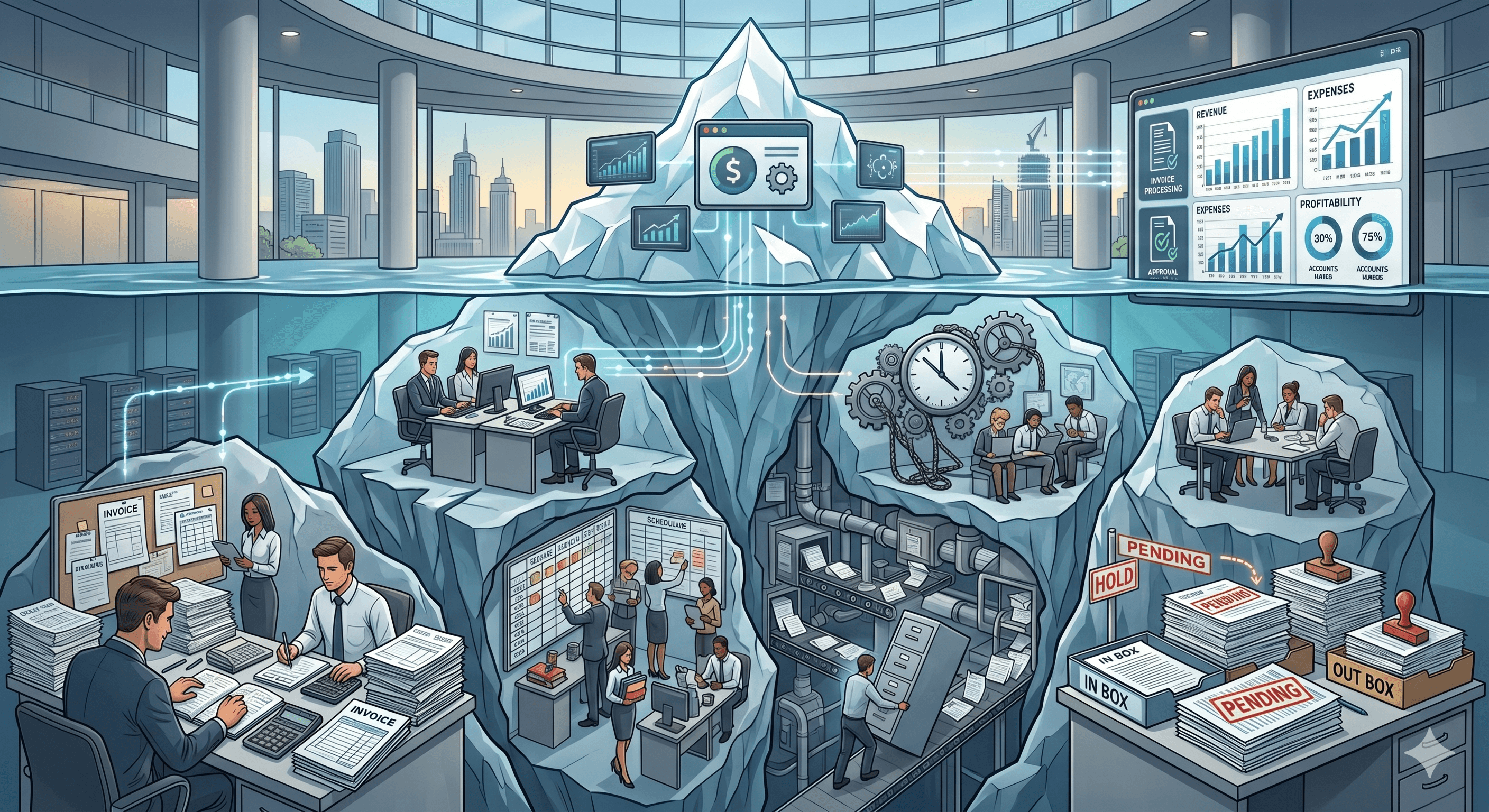
Is manual accounting really cheaper for a company?
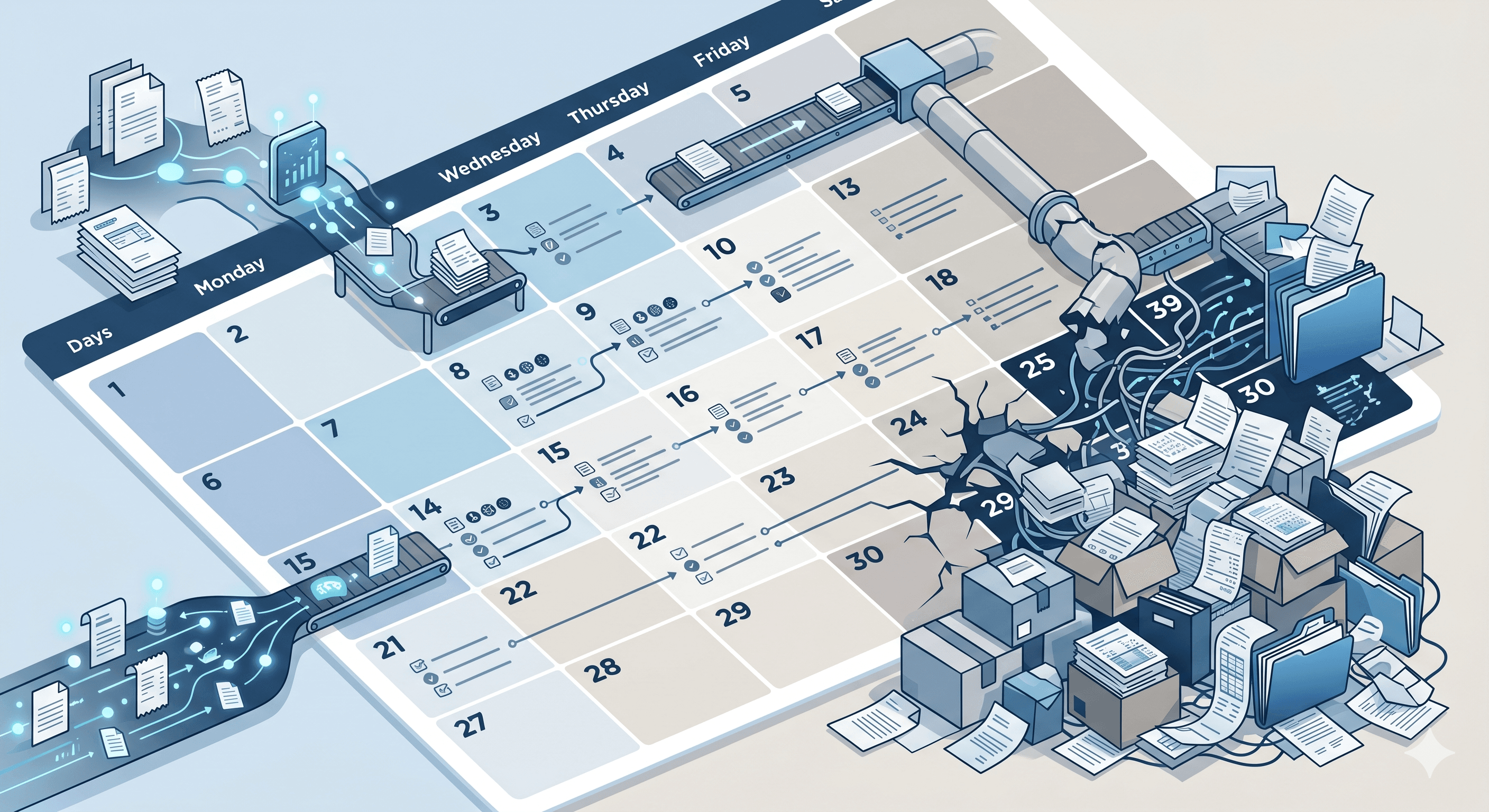
Why Accounting Tasks Pile Up at the End of the Month and How to Prevent Overload?

Why are Latvian companies lagging behind in adopting cloud services?

Digital Accessibility in Latvia: Law, Requirements, and Practical Implementation

What is ESG reporting and why is it becoming important in accounting?

Cybersecurity in Accounting: How to Protect Financial Data and Reduce Risks in Your Company
Implementation of E-Invoices in Latvia 2026: Expert Insights, XML Standards, and Practical Steps

Local, cloud-based, or web solution - what is the difference?
How to Optimize Processes Using the Transaction Pricing Model?
How to Manage Accounting for a Small Business: Software or Accounting Firm?

Cloud Solutions in Accounting: Benefits and Security

UBP Hybrid Model: Future Pricing Strategy for SaaS

What is an e-invoice?

Legislative Changes in Latvia in 2026
5 Accounting Trends in 2026

Jumis Finance — Fast document processing

Artificial Intelligence in Accounting: Opportunities, Risks, Future Direction

What is UBP (usage-based pricing)?

More Accessible Goods and Services - How to Achieve It?

The Shift to Cloud Solutions Gains Momentum

Software must be maintained as long as someone uses it

From Research to Device – How Are Computer Programs Created?

Digital Tools for Idea Generation

More Pleasant and Beneficial – Products with Added Value

More than half of employees prefer to learn exclusively online

Digital documents and fewer meetings – what changes must businesses adapt to?

How to Digitize a Company's Accounting Documents?

The Power of E-Commerce: Even Small Businesses Can Grow Big Online

How data can help track your customer's lifecycle

Digitized Accounting Saves Employee Time