
E-invoice vs. PDF invoice: what is the difference?
In brief:
- A PDF invoice is an electronic document primarily intended for human reading.
- An e-invoice is a structured electronic invoice with data prepared in a machine-readable format for automatic processing.
- Sending an invoice via email in PDF format does not make it an e-invoice.
- The primary advantage of an e-invoice is the ability to use invoice data for automated processing, rather than simply the fact that the document is sent electronically.
At first glance, a PDF invoice and an e-invoice may seem very similar. Both can be sent electronically, viewed on a computer, and used as an invoice for goods or services received. However, their operating principles differ, and from 2028, the use of e-invoices will be mandatory for B2B transactions between Latvian companies.
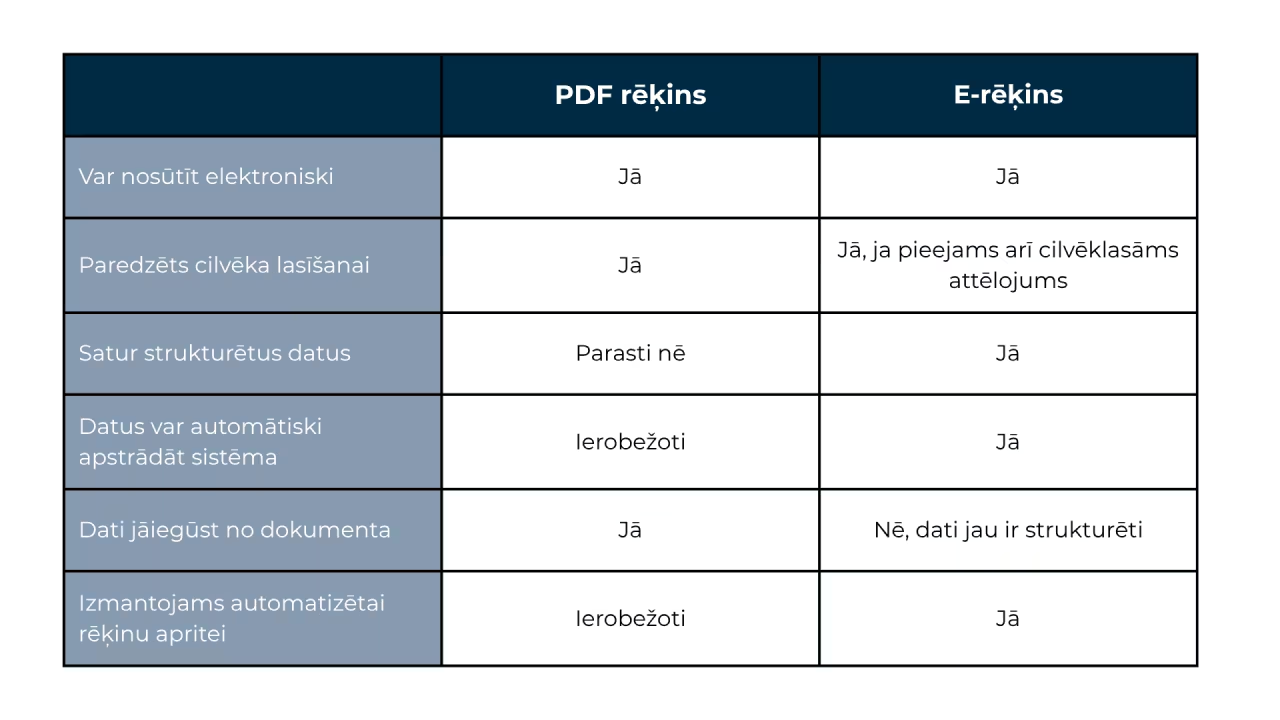
The main difference lies in how invoice information is structured and how it can be processed further. A PDF is primarily a human-readable document format, whereas a structured e-invoice contains data that can be automatically read and processed by accounting or other business management systems.
What is a PDF invoice?
PDF, or Portable Document Format, is a file format that preserves the appearance of a document regardless of the device or software used to open it. This makes PDF convenient for sending, viewing, and storing invoices.
For example, a company prepares an invoice in an accounting program or another document creation tool, saves it as a PDF, and emails it to the client. The recipient can open the PDF and read the information provided—the invoice number, date, amount, VAT, bank account, and other details.
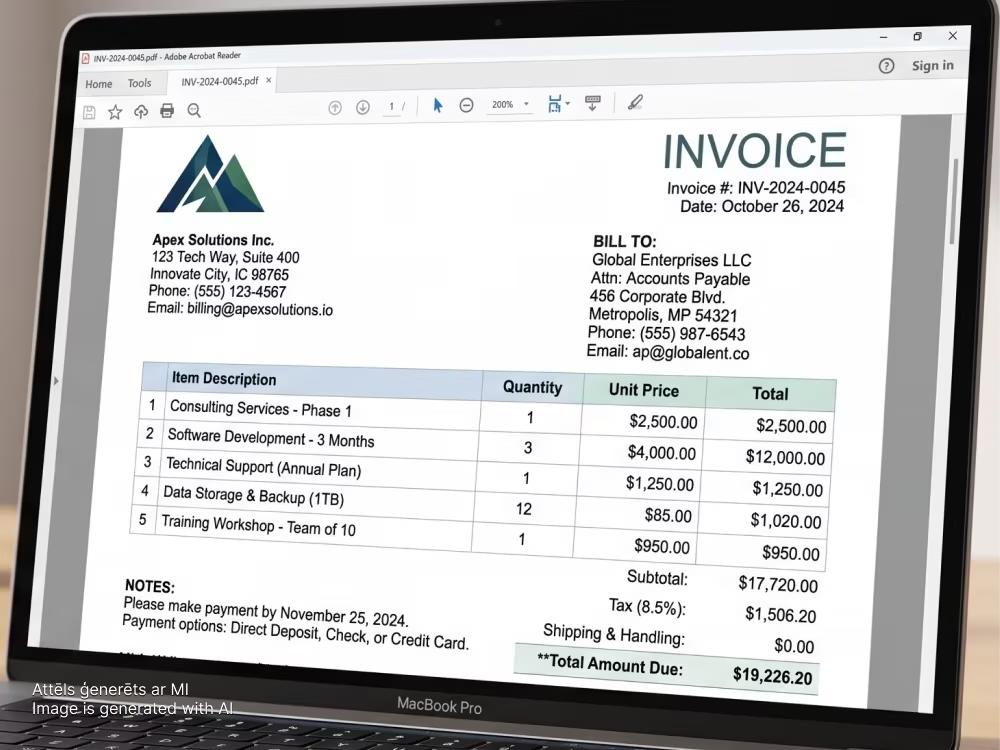
However, this does not mean that the recipient's accounting system automatically "understands" this information. PDF is designed for easy human consumption. While PDF invoice data does not always have to be entered manually—for instance, various OCR (Optical Character Recognition) solutions can read information from the document—reading PDF data via OCR is not the same as using a structured e-invoice.
What is an e-invoice?
A structured electronic invoice is an invoice prepared, sent, and received in a structured, machine-readable format that allows for automatic and electronic processing. In Latvia, the file format for a structured e-invoice is XML, and its structure must comply with established requirements, including the PEPPOL BIS Billing 3.0 specification.
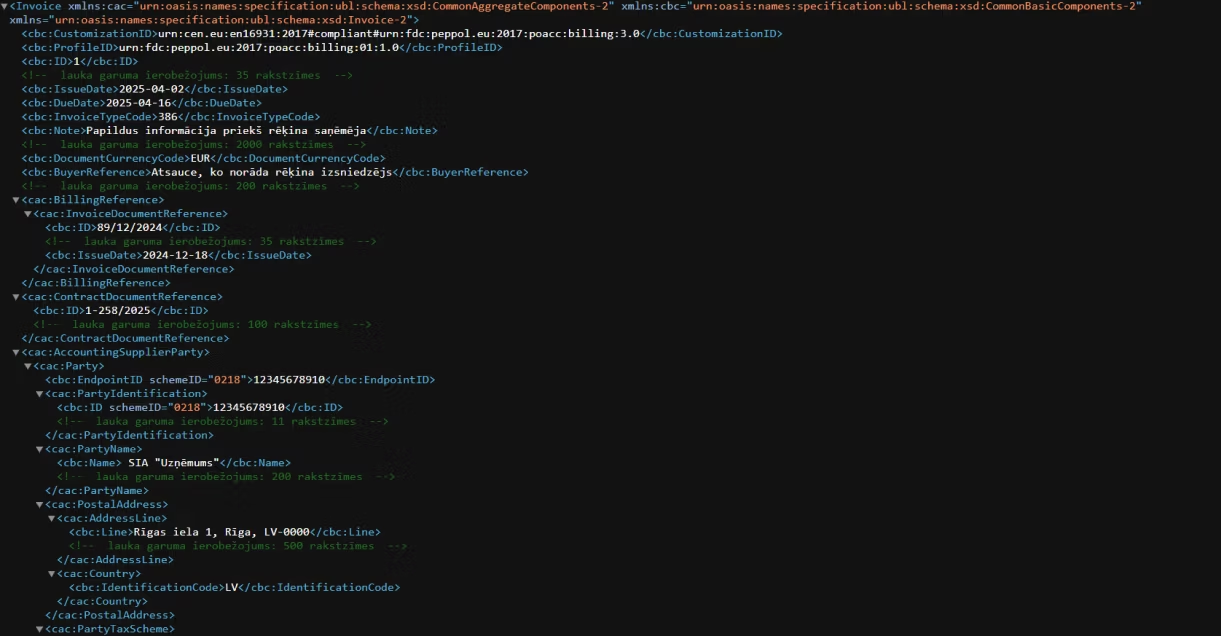
This means that e-invoice information is not just visually displayed in a document. Data regarding the invoice number, date, seller, buyer, amounts, VAT, and other elements are structured so that software can process them and automatically populate the necessary fields. This structure is the most significant difference between a PDF invoice and an e-invoice.
If you would like to learn more about e-invoices and how they work, read our blog post What is an e-invoice?
E-invoice vs. PDF invoice: key differences
Is a PDF invoice sent via email considered an e-invoice?
No. If a company prepares an invoice in PDF format and sends it to a client via email, it is an electronically sent PDF invoice, not a structured e-invoice.
For example:
PDF invoice
Company → PDF file → email → client
In this case, the client receives a document that can be opened and read. To use the data contained within it in an accounting system, it must be manually entered, imported using a suitable solution, or extracted from the document using data capture technology.
E-invoice
Company → structured invoice data → e-invoicing solution → client's accounting system
Here, invoice data is transmitted in a structured format, which allows for automatic processing.
Can an e-invoice also be a PDF?
A structured e-invoice and a human-readable representation of the invoice can coexist. For example, Latvija.lv e-address solution and also Jumis Envoice, when preparing an e-invoice, an XML file is created for structured processing alongside a PDF file in a human-readable format.
This clearly illustrates the distinct roles of both formats:
- XML provides structured data for systems;
- PDF allows a person to conveniently view the contents of the invoice.
Why are structured e-invoices important for accounting?
The difference becomes particularly significant when a company has to process a large volume of invoices. When receiving a PDF invoice, the accountant or the company's system must extract the necessary information from the document. Depending on the tools used, this may involve manual data entry, data verification, or automatic reading via OCR.
In contrast, the data in a structured e-invoice is already prepared for software use. This opens up the possibility of automating several stages of the invoice workflow, such as receipt, data entry into the accounting system, and subsequent processing.
This does not mean that every e-invoice is automatically recorded without human intervention. The level of automation depends on the accounting software used, the e-invoicing solution, and their integration. However, a structured format provides the foundation for systems to exchange invoice data without the need to re-read it from a visual document.
Frequently asked questions
Is a PDF invoice an e-invoice?
No. A PDF invoice is an electronic document, but a structured e-invoice is prepared in a machine-readable format that allows its data to be processed automatically. In Latvia, the XML format is used for structured e-invoices.
Can an e-invoice be in PDF format?
PDF can be used as a human-readable representation of an e-invoice or alongside a structured XML file. However, the PDF file itself does not meet the requirements of a structured e-invoice.
Do e-invoice data have to be entered into the accounting software manually?
If an e-invoicing solution is integrated with accounting software, structured data can be transferred to the system for automatic further processing. The extent to which the process can be automated depends on the specific solutions used and their integrations.
Can PDF invoice data also be processed automatically?
Partially. For example, OCR technology can read data from a PDF document. However, such data extraction differs from a structured e-invoice: OCR first attempts to extract information from the document and may make errors, whereas in a structured e-invoice, the data is initially prepared in a machine-readable structure, so the system receives the exact values specified in the e-invoice rather than attempting to read them from a document.